ROAD TO 100 - GOING OUTTABOUNDS DOWN UNDER
Previously on Chapter I,
- 07/01/2025 Forest City Golf
- 07/01/2025 Horizon Hills
- 10/01/2025 Mandurah
- 12/01/2025 The Cut
- 14/01/2025 Meadow Springs
- 15/01/2025 Kwinana Golf Club
- 24/01/2025 Margaret River Golf Club
- 26/01/2025 Denmark Golf Club
- 27/01/2025 Albany Golf Club
- 29/01/2025 Esperance Golf Club
IV. Kalgoorlie — Dust, a Job, and the Wait
From Esperance, we drove five hours inland into dust, heat, and Kalgoorlie, which we assumed at the time would mark the end of the trip's first chapter. We had arranged a job with the local golf course maintenance team, a reason to stay, and a bit of long-awaited stability.
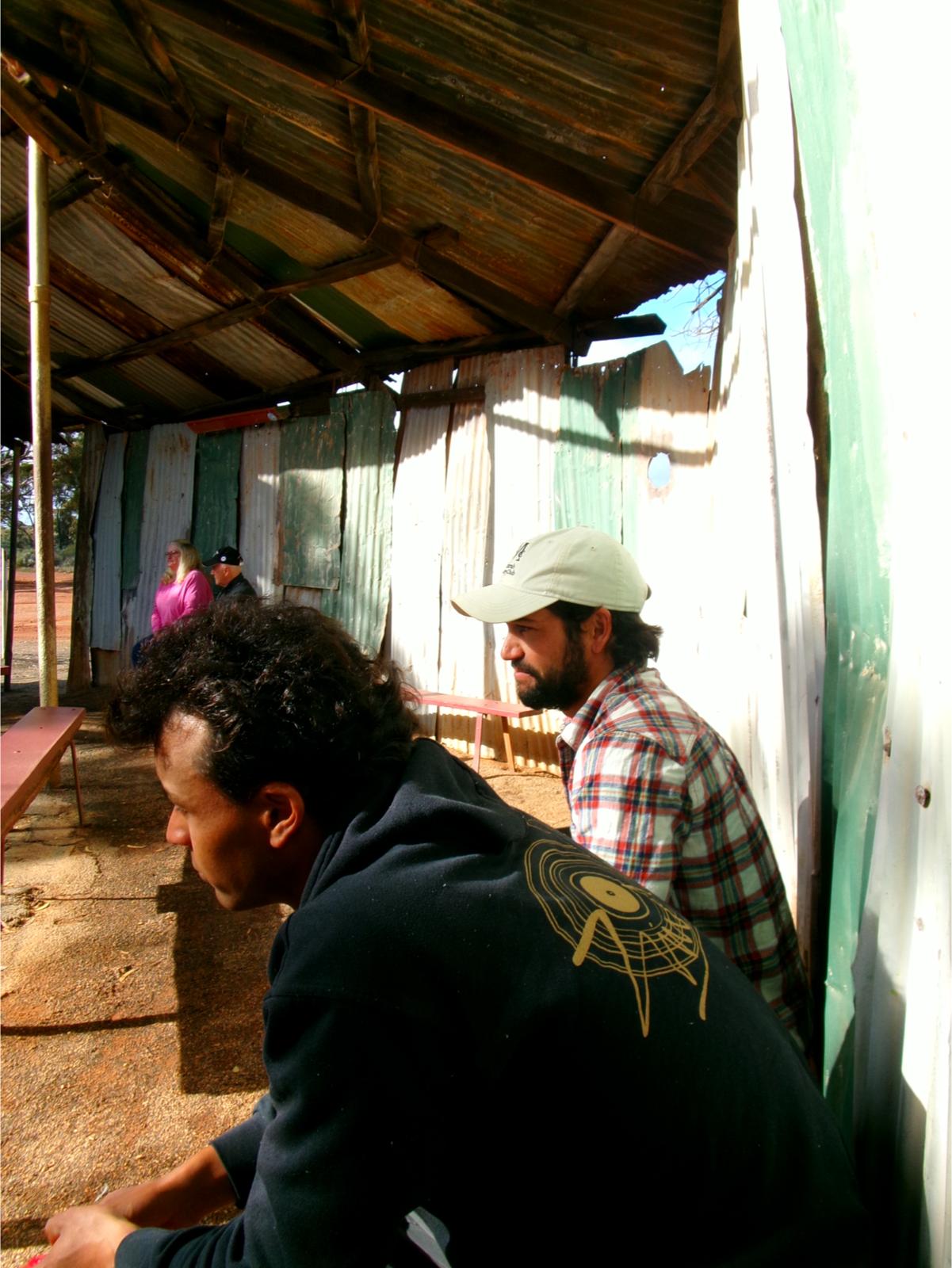
In our first month we had already played eight courses across Western Australia. But the list kept growing and, while the start date for the job remained frustratingly unclear, our funds ran low. We waited, and in that uncertain stretch between plans and reality, we needed options. Quickly! We spent several days calling farms and vineyards across the region. Most of them led nowhere until a woman, Lyn, called back. A vineyard six hundred kilometers away, near Perth, needed help for a few days and could offer us somewhere to camp in return. It was exactly what we needed, and no trouble at all for Ronda. Before leaving Kalgoorlie for the vineyard, we got one last taste of the town at the Two Up Shed, a gambling game born in Australia – illegal, except on Anzac Day, and, by local exception, in Kalgoorlie. The crowd was a mix of locals, travelers, and miners, gathered around a game that felt less like gambling and more like a tradition everyone had quietly agreed to keep alive.
Two-up is banned across most of Australia because, like most unregulated coin-toss gambling, it's simple enough to rig and hard enough to police, so state governments outlawed it outside of a single sanctioned day a year: Anzac Day, when it's played in memory of the soldiers who used it to pass the time in the trenches. Kalgoorlie is one of only two places in the country granted a standing exception to that rule, alongside the mining town of Broken Hill in New South Wales. In both towns, the game survived because the community fought to keep it: Kalgoorlie's two-up school, a set of corrugated iron sheds outside of town, is licensed to run any day of the year, a rare piece of frontier lawlessness the town simply refused to let go of.
Our first real work came at Hainault Wines: mornings spent picking grapes under the sun, afternoons helping with netting across the vineyard rows. It was simple, honest work, and it kept the trip alive when little else could have. After a week and on our last day there, the message finally came through, we were due to start in Kalgoorlie in a week. After weeks of uncertainty, the golf course job was real, and we were heading back.
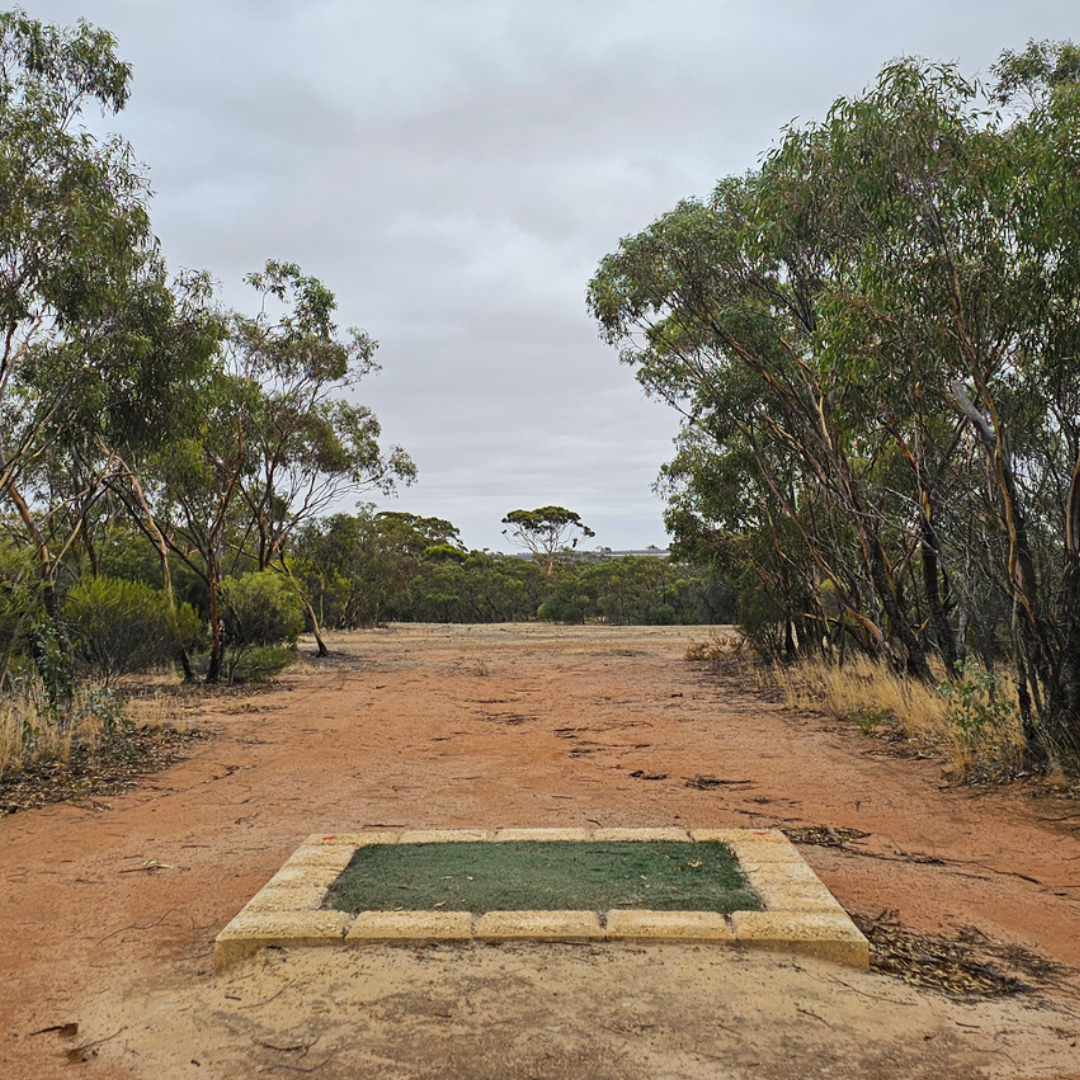
On the way, we split the drive in two on the recommendation of some Dutch friends we had met along the road, who insisted we couldn't miss the Salt Pools and Wave Rock. Somewhere between the two, we stumbled onto a golf course unlike anything we had played before. No bookings, no clubhouse, nothing but a post box on the first tee: “Donate five dollars, and you are in”. It was a reminder that golf doesn't need much in the way of structure, or money, or permission from anyone. Sometimes all it needs is space, and a handful of people stubborn enough to build something out of very little, proof that the game can be as open as anyone's willing to make it.
- 10/02/2025 Whaleback
- 11/02/2025 Hillview
- 13/02/2025 Wave Rock
- 14/02/2025 Kalgoorlie
V. Five Weeks That Changed the Trip
Back in Kalgoorlie, working by day and playing golf whenever we could, we finally stopped moving long enough to look back at what we had done. In five weeks we had played eleven golf courses and stayed at nine campsites, while Ronda had covered 4,500 kilometers across South Western Australia. But the distances and totals weren't really what stayed with us. What stood out was the people, small, welcoming golf communities scattered across the country, entirely without pretension. Some courses kept no tee times at all; you simply showed up. If nobody was in the clubhouse, you paid into a box outside or settled after the round. As for a dress code, the only real requirement was wearing clothes. We lived at that campsite, the Big4 Acclaim Prospector Holiday Park, for two and a half months. Tents, dust, wind, cold mornings, hot afternoons and gradually, without quite noticing it happening, our standards began to shift. Walking a hundred meters to the toilet became unremarkable. Waking at four in the morning in total darkness became routine. What starts out as inconvenience eventually turns into a kind of freedom, once you realize how little you need to get by: a tent, a mattress, a stove, and a reason to get up each morning.
The campsite itself served our purpose. Seeing so many different people passing through it, backpackers chasing their next adventure, prospectors still hoping to find gold in the desert, families making their way around the country, retirees carrying a lifetime of stories, bikers, workers, wanderers of every description. Somewhere in that kitchen, unfilmed, there was a better story than anything on television. For a few days, everyone became neighbors. Then someone would leave, and someone new would arrive to take their place.
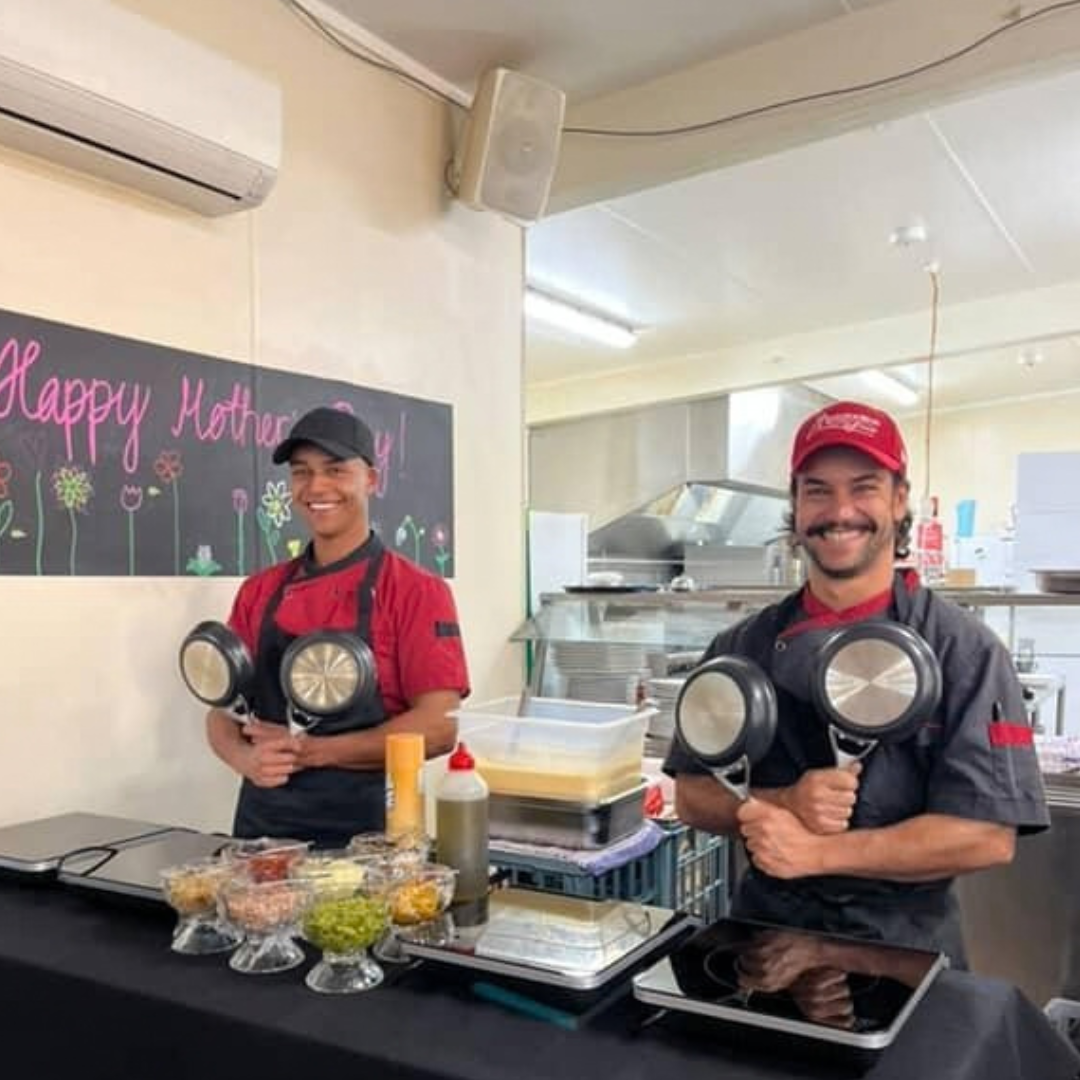
Work was what kept the dream alive, first at the vineyard and later at the golf course. Early mornings, shovels, whipper snippers, and a small, tight-knit team that worked hard and laughed harder. There were dishwasher shifts, stints as kitchen hands, even sometimes helping as a sous chef. None of it was in service of a career. It was simply what it took to keep the trip going.
Kalgoorlie itself carries far more history than its dust lets on. Long before mining, this land was, and remains home to the Wongatha and other Aboriginal peoples of the Eastern Goldfields, whose connection to Country stretches back tens of thousands of years. When gold was discovered in the 1890s, it triggered one of the largest gold rushes in Australian history, drawing more than 40,000 people into the region within a few short years, and permanently reshaping Aboriginal life across the Goldfields in the process. Since then, the town has produced over 60 million ounces of gold, with the Super Pit, a man-made canyon nearly 3.5 kilometers long and more than 600 meters deep, sitting at the center of it all.
Modern Kalgoorlie runs on mining shifts and fly-in-fly-out (FIFO) culture, with workers flying in and out on rotation and days built entirely around the mine. It is a town of overlapping identities: ancient Country, a mining engine, the rhythm of fly-in-fly-out life, and an everyday community of families, students, and workers who, like us, arrived for a job and stayed for something more. And in the middle of it all sits a golf course, a place where, for a few hours at least, everything slows down. Kalgoorlie Golf Course was designed by Graham Marsh, an Australian golfing legend, and somehow sustains fairways where grass has no business growing, kept alive on recycled water. It hosted the WA PGA, and Min Woo Lee once set the course record there. The club itself dates to 1899, making it one of the oldest in Western Australia. Laid out originally on borrowed land at the racecourse, nine holes, hand-cut fairways, a community project from its very first day. It has weathered wars, mining booms, and generations of players who called the Goldfields home, and what has kept it standing through all of it is the same quality that built it in the first place: adaptation, and its role as a meeting point for the town, a place to step away from the intensity of Kalgoorlie life and slow down for a few hours.
VI. To the North Coast, and a New Travelling Buddy
Six months after arriving in Kalgoorlie expecting to stay only a few weeks, it was time to move on, this time carrying more than memories. We left with friendships, stories, and a far deeper understanding of Australia than we had arrived with. Ronda had served us faithfully, but after thousands of kilometers and one thoroughly exhausted CV joint, retirement was overdue.
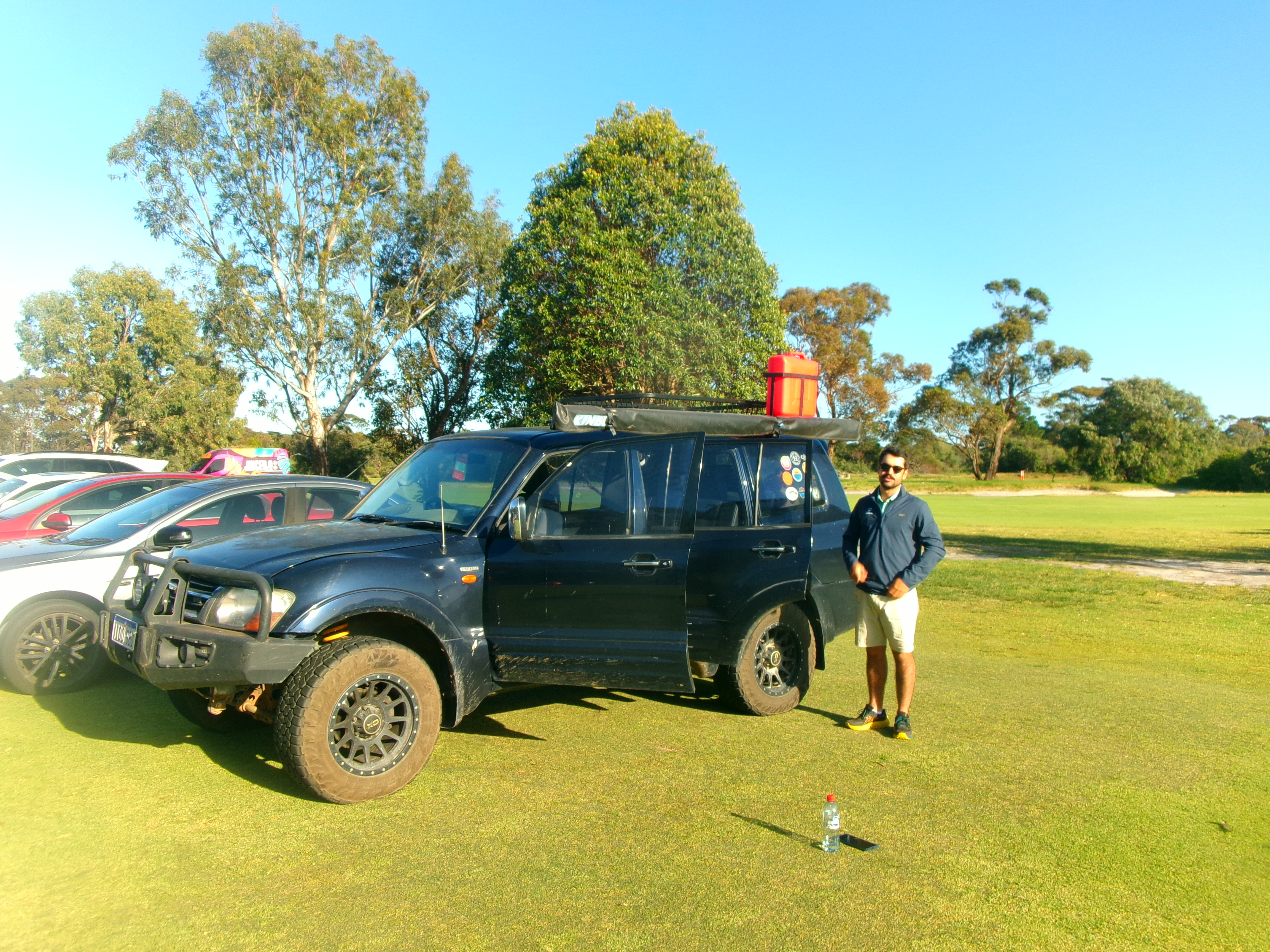
In her place came Ronnie, a fully equipped Mitsubishi Pajero with a fridge, dual batteries, and solar panels. A proper touring setup that, for the first time, made us feel less like travelers passing through and more like we belonged on the road. The name came the same way Ronda's had: from a member at the local golf course, this time in Kalgoorlie. Ronnie was a seventy-year-old retired jockey, still quick despite the decades always off on the first tee times and even had a whisky-and-soda mix named after him at the club bar. It fit on more than one level, and it felt right.
At Carnarvon, old habits held firm: straight to the golf course, no tee time, no booking, no barriers. The local members welcomed us as though they had known us for years, and by this point it was clear that none of it was down to luck. This was simply how Australian golf worked, community first, everything else second.
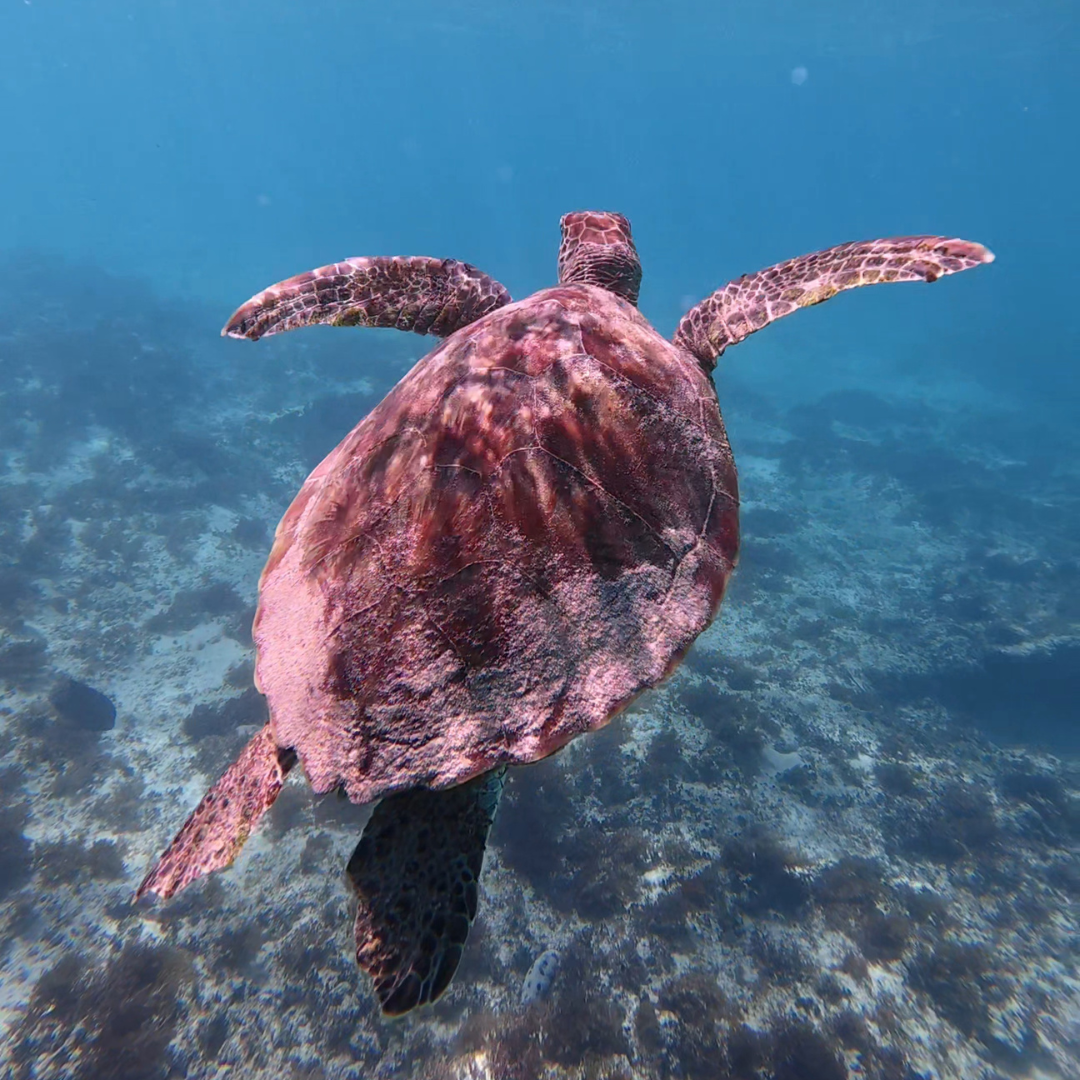
From there we reached Exmouth, where red desert meets turquoise water and the landscape ends abruptly at the edge of the ocean. We camped inside Cape Range National Park, just meters from the beach, with no alarms, no schedules, and no mining trucks rumbling in the distance. Only the sound of waves. After six months in the outback, it felt like we were arriving on another planet altogether. The days were spent snorkeling among schools of fish, swimming alongside sea turtles, and attempting, without much success, to catch something for dinner.
Back in Perth, we stayed with a golf club member we had met months earlier in Kalgoorlie, another reminder that the trip kept moving forward because of people, not plans. We managed three more rounds during the week, at Hartfield, El Caballo, and Royal Fremantle, Min Woo Lee's home course, where, as luck would have it, he happened to be playing that very day. It was one of those moments when the golf world suddenly feels remarkably small. For what it's worth, Royal Freo also served the best meat pie of the entire trip.
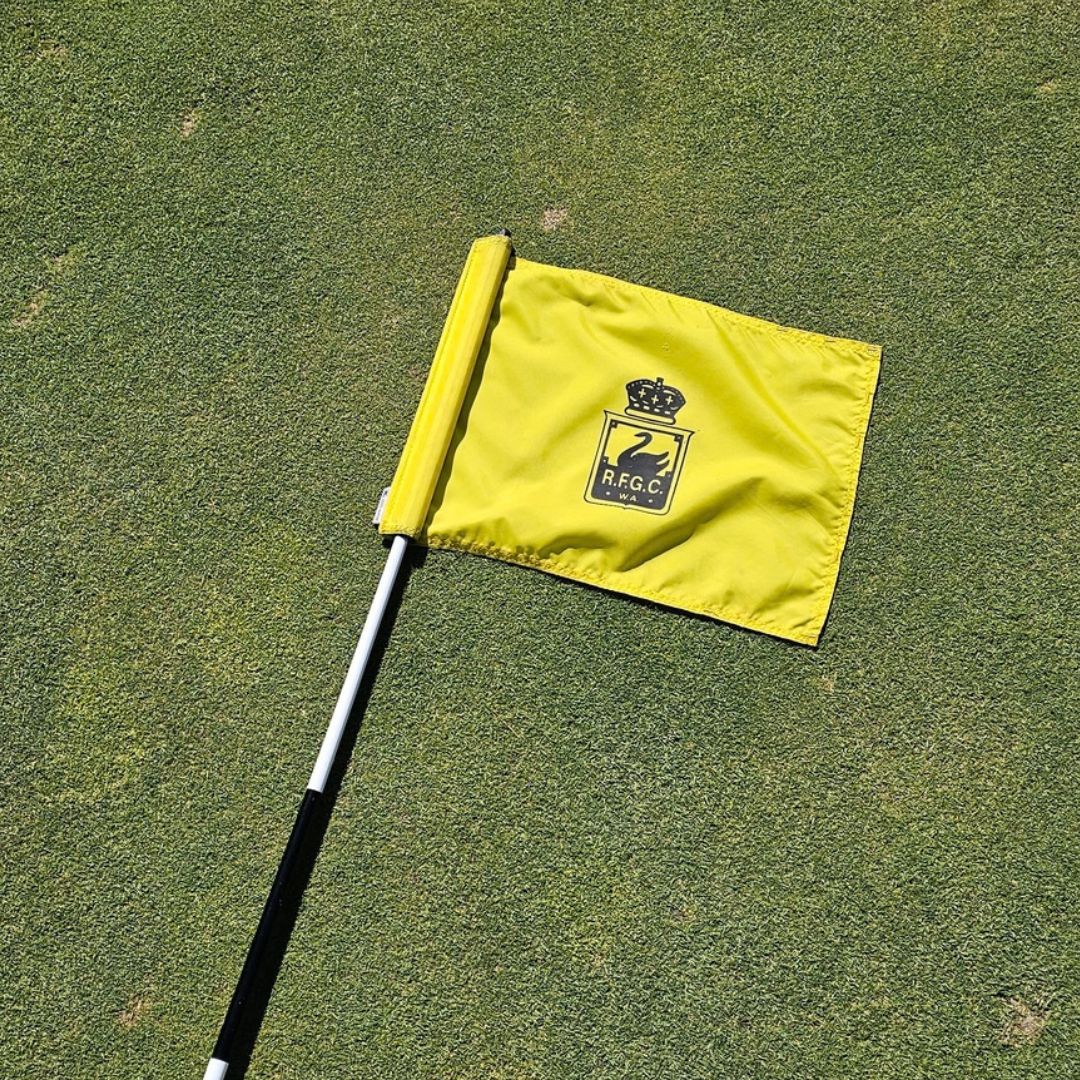
- 24/08/2025 Carnarvon
- 28/08/2025 Exmouth
- 01/09/2025 Hartfield
- 03/09/2025 Royal Freemantle
- 04/09/2025 El Caballo
VII: The Goldfields Classic
The Goldfields Classic is a four-day event drawing around a hundred and forty golfers from all around Western Australia. We heard tales about long days of golf and camaraderie, a huge calcutta lottery and gold nuggets as prizes, we had to be there! One day of stableford, one of two-ball better ball, and two days of individual stroke play. Earlier that week, I had played the best round of golf of the entire trip: two-under-par. On the first day of the event, a two-over, forty-point round paid back the entry fee. On the second, Carlos and I won the Two Ball Better Ball together. He shot five-under by himself. Everything seemed to be trending in the right direction.
Then the weekend stroke play arrived, along with some familiar ghosts: an 82, a 78, and somewhere in between, a ten on a par five, the kind of collapse that had become almost a fixture of my rounds when I was a junior. What was different this time was the reaction to it. Months in Australia had been quietly teaching us lessons that had very little to do with golf, and for the first time, I could see how they were changing me.
Next: World's Longest Golf Course. 6 months in King Island, Australia's #1 course.