

With Augusta fresh in the memory and Rory McIlroy's name newly etched into back-to-back Masters wins and Grand Slam history, there's never been a better time to tee it up on a course designed by a man who knows exactly what it takes to win there.
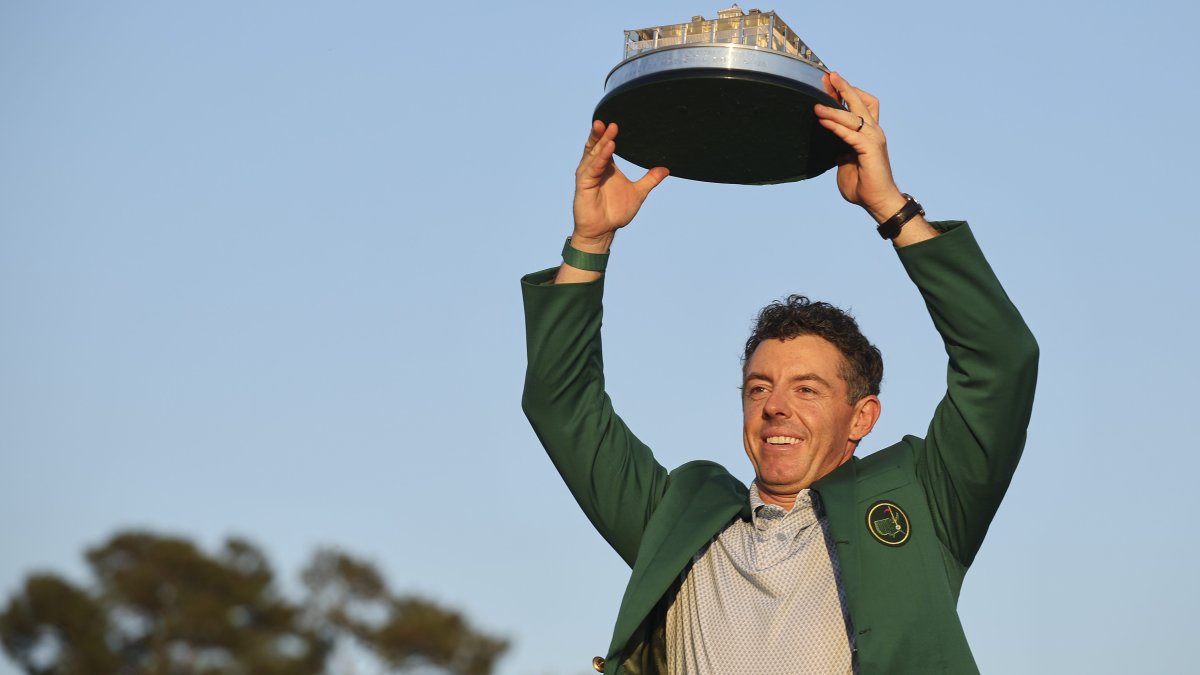
The Masters is in the heart of every golfer. We all love to watch the selected few tee up on a course which they know will test every bit of their skill. With Rory winning back-to-back, the golf world is still buzzing. And rightly so.
But here's the thing: Rory isn't the only legend with a connection to Augusta that matters to us in the Algarve. There were only three players to ever win back-to-back before him, so let’s talk about one of them.
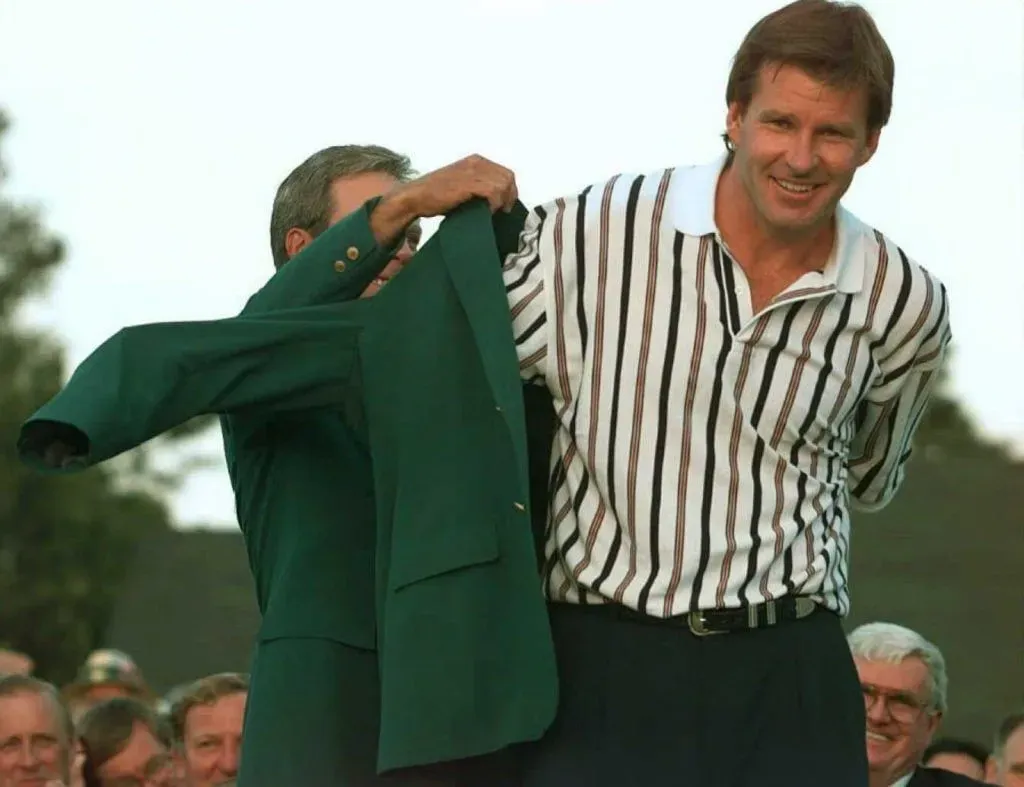
Sir Nick Faldo won the Masters three times. 1989. 1990. 1996. Three green jackets from a man who approached the game like a chess grandmaster: methodical, precise, relentlessly strategic. That DNA didn't retire when he hung up his competitive clubs. It went into his other passion: course design.
And right here in our backyard, about 45 minutes from Faro airport in the Silves’ hills, sits one of his finest works. The Faldo Course at Amendoeira Golf Resort.
What You're Walking Into
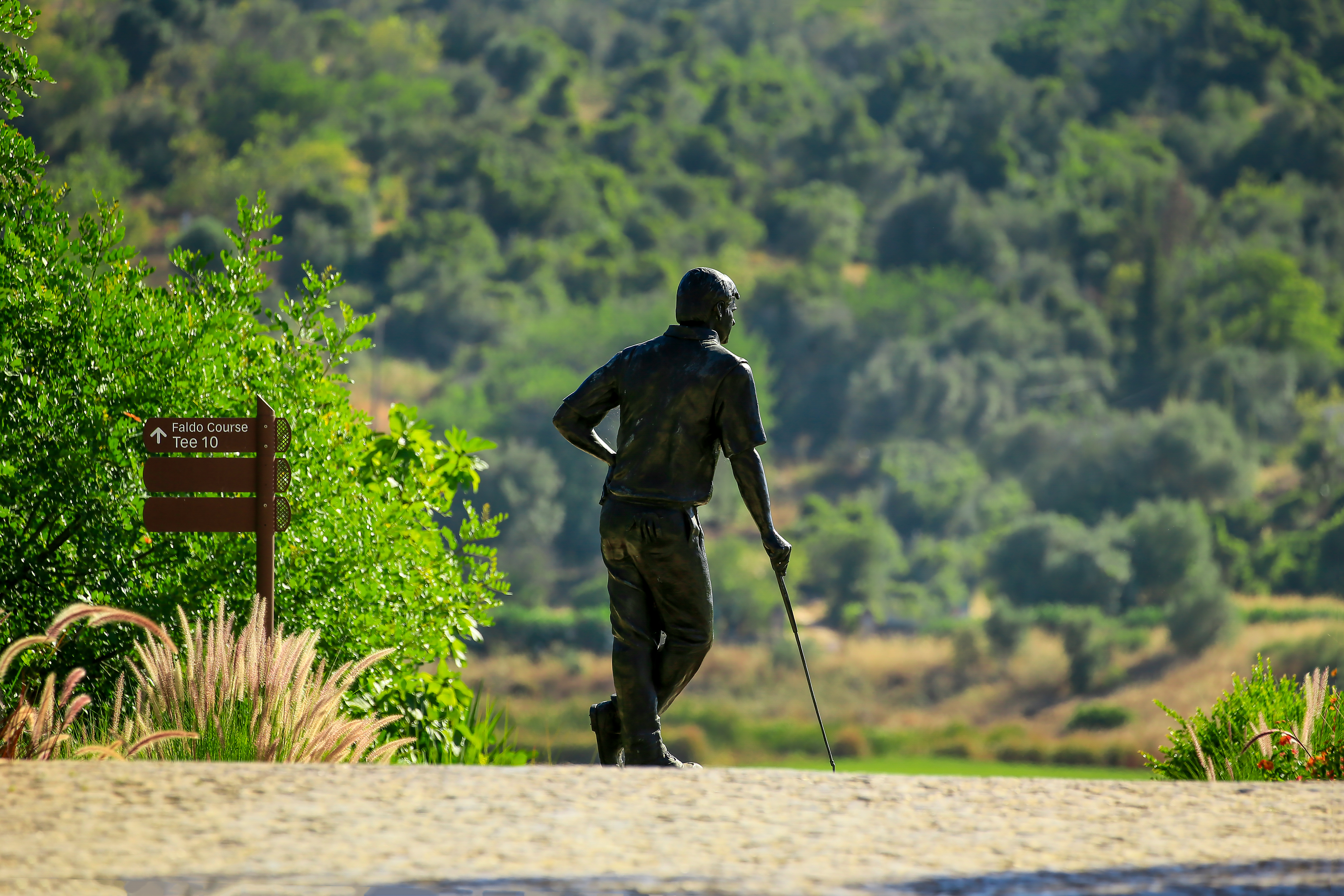
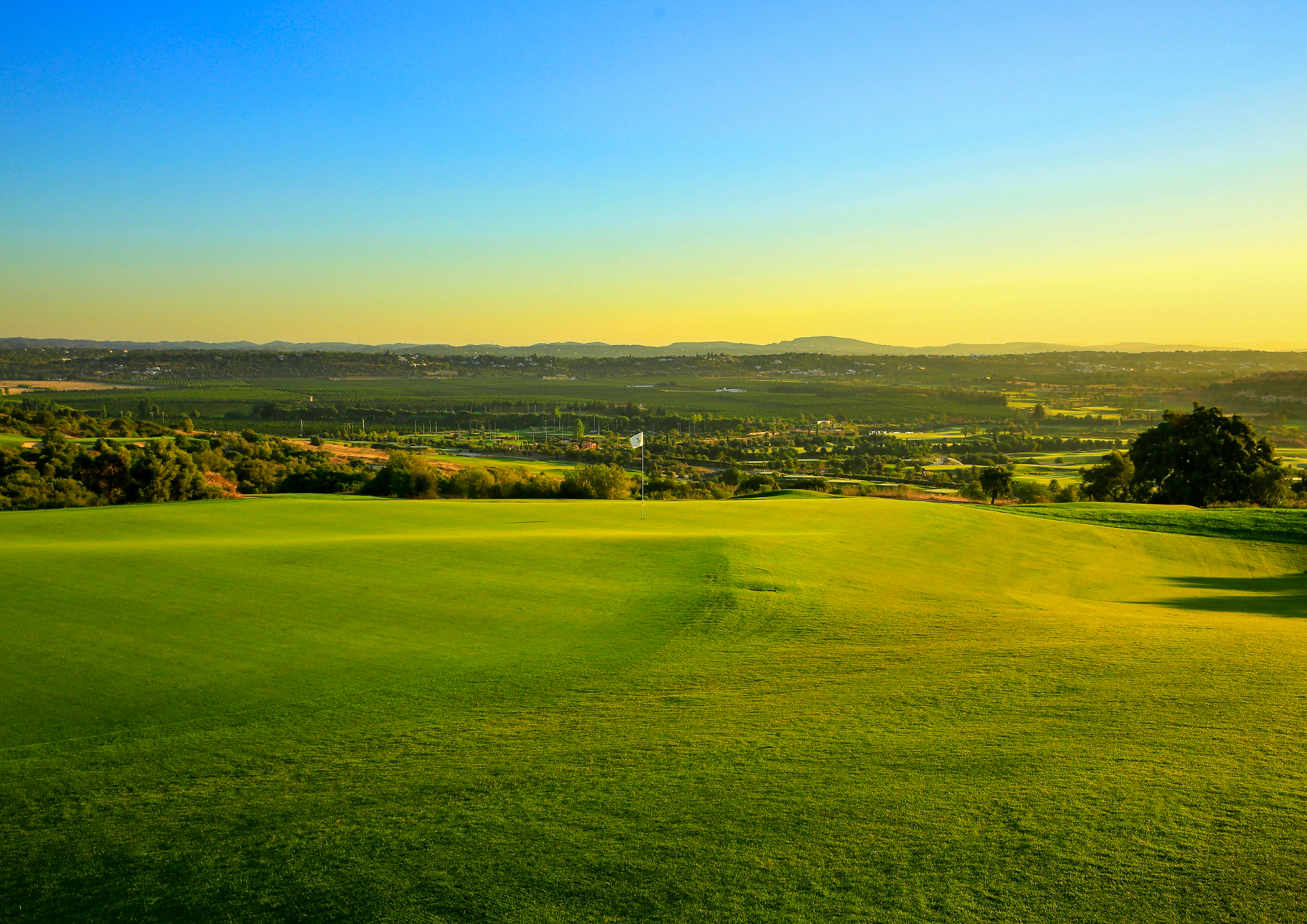
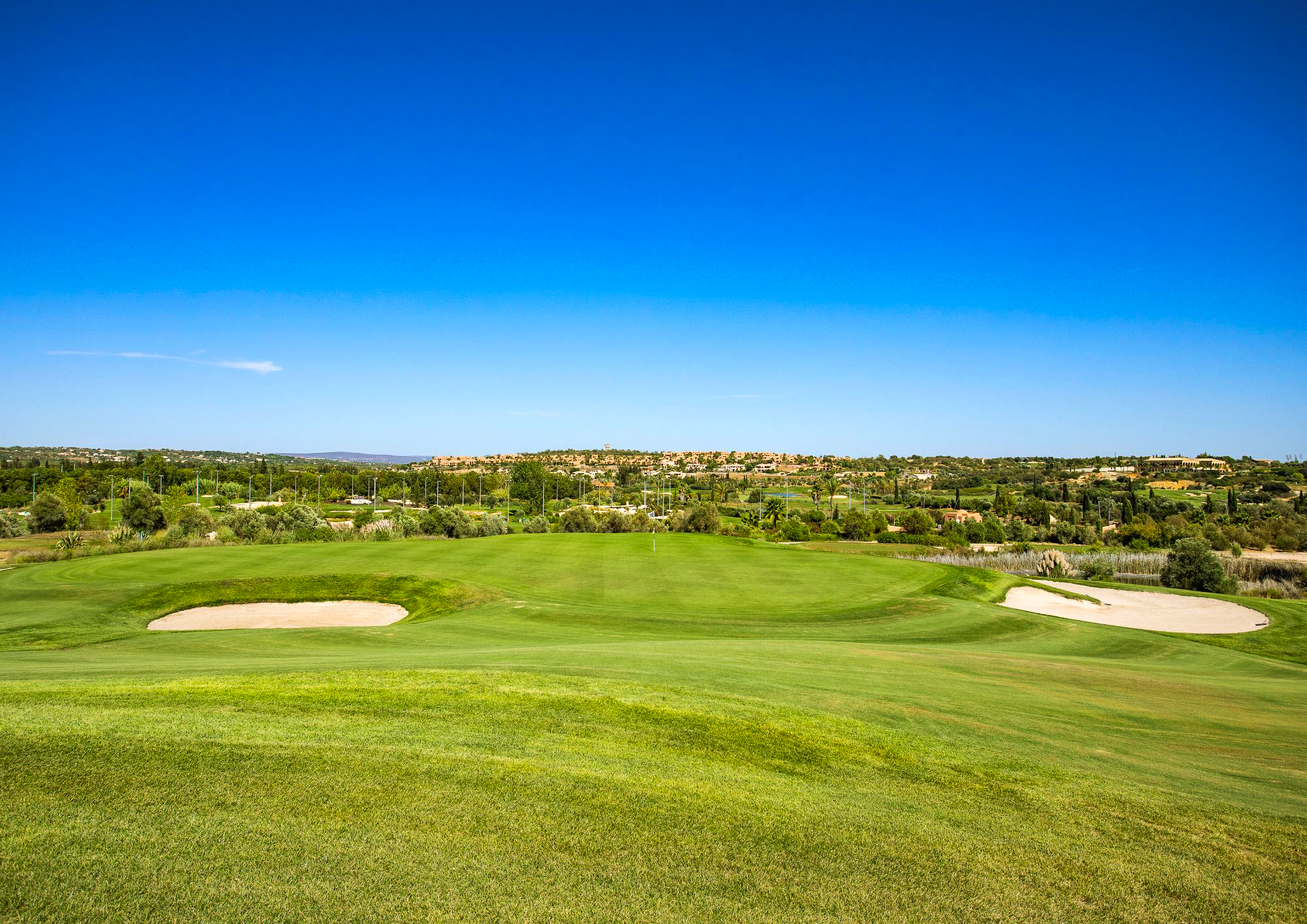
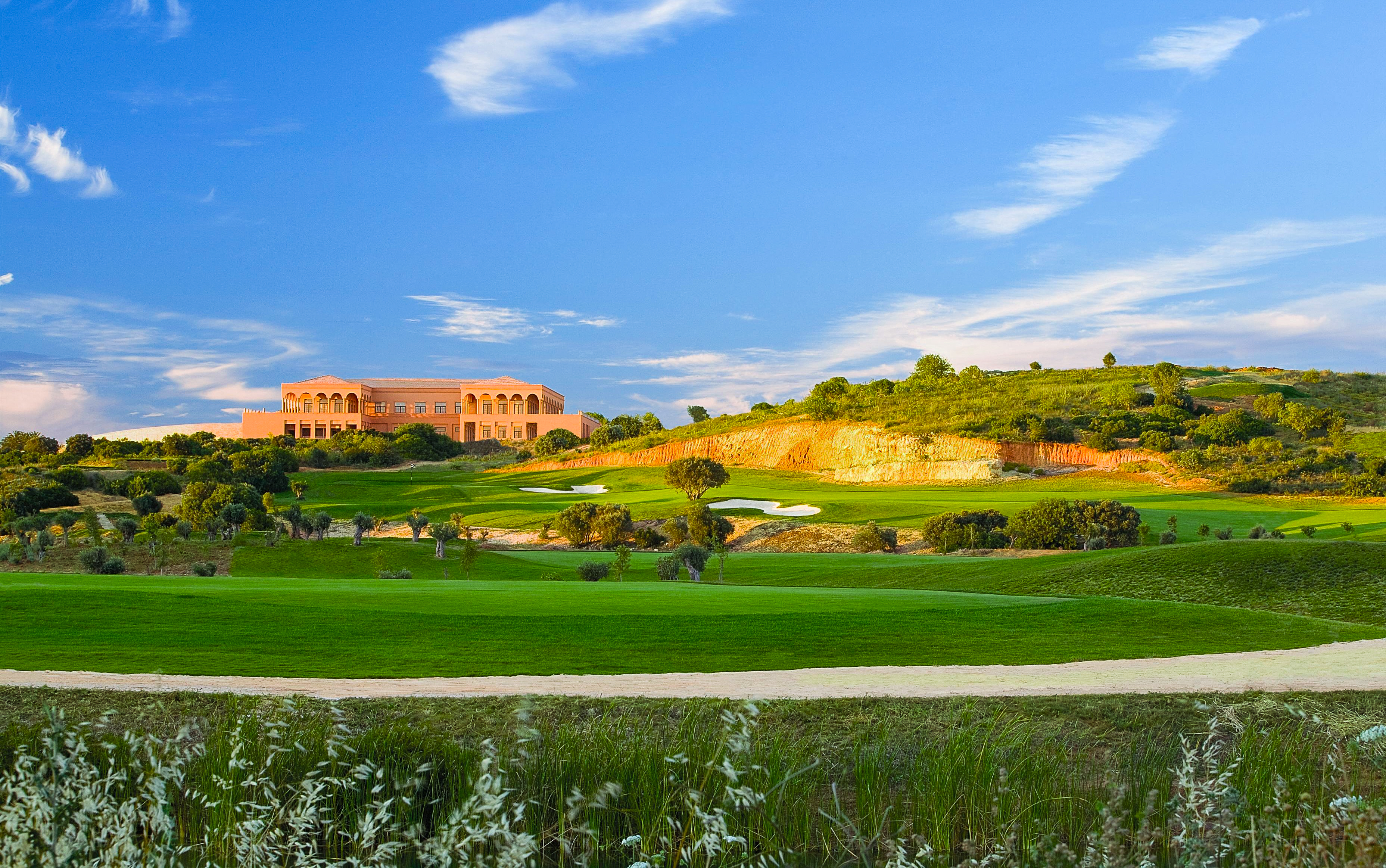
Opened in 2008, the Faldo Course is a par-72 championship layout measuring 6,598 metres from the back tees, with a slope rating of 142 that should tell you immediately this is not a Sunday stroll. It's built on terrain that Faldo himself called "dramatic," with undulating land, natural rocky outcrops, wandering water hazards, ancient olive trees, holm oaks, and desert scrub bunkers of crushed limestone that give the whole place a distinctly un-European feel. Think central Algarve meets Arizona, with ocean views on a clear day. The design philosophy here is pure Faldo: it asks questions. Constantly. Every tee shot presents a decision. Every approach demands you think about where the miss should go, not just where you want it to land. If you've watched Faldo commentate, you'll recognise the voice: precise, unsparing, expecting more from you. That's what 18 holes here feels like. In 2016, it was crowned Portugal's Best Golf Course by the World Golf Awards. It earns that every time out.
The Front Nine - Setting the Tone
Hole 1 - Par 4, 415m (SI 7) No easing in here. You're on an elevated tee looking out over scrub brush to an undulating fairway below. The approach is uphill to a well-protected green, and the tone is immediately set: hit it straight, think about your next shot before you play this one. A bogey to start is very easy. A par feels like a win.
Hole 2 - Par 3, 174m (SI 17) The scorecard index suggests this is a breather, don't believe it. Water is in play, the green is firm and fast, and any wind off the hills will play havoc with club selection. Take your medicine, hit the middle, walk away with a three.
Hole 3 - Par 4, 324m (SI 11) The shortest par 4 on the front nine, but the rocky landscape and tight fairway keep the driver in the bag for most. A well-placed lay-up sets up a wedge into a reachable green, Faldo giving you one back, just so you feel good about yourself before he takes it away again.
Hole 4 - Par 5, 546m (SI 3) The hardest par 5 on the course. Long, with the terrain working against you, this one rewards patience over ambition. Three solid shots to a manageable position will score better than two heroic ones and a scramble. Very much a Faldo hole.
Hole 5 - Par 4, 365m (SI 9) One of the most memorable on the front nine. The tee shot offers a thrilling option to carry the largest lake on the course - go for it or lay up left, but be honest about your numbers before you pull the driver. The green is well-guarded and the view across the water is spectacular.
Hole 6 - Par 5, 541m (SI 5) A long, sweeping par 5 where position off the tee opens up the second shot options. A birdie is very much on if you respect the olive trees and desert scrub framing the fairway. Take it, you may need it later.
Hole 7 - Par 3, 199m (SI 13) The longest par 3 on the course and a proper test of ball-striking. The green is elevated and the wind here tends to swirl. Club up and aim for the fat part; this is a two-putt-and-leave kind of hole for most of us.
Hole 8 - Par 4, 388m (SI 1) The stroke index 1 hole, and it lives up to it. A demanding driving hole followed by a precise approach to a green with little room for error. This is where scorecards get ugly if the driver misbehaves. Take your time. Pick a target and commit.
Hole 9 - Par 4, 355m (SI 15) A relatively forgiving closing hole on the front nine, use it. Get yourself into a comfortable position off the tee and make your par. You'll want the confidence heading to the turn, because the back nine gets interesting.
Front nine out in 36 and likely to feel harder than that.
The Back Nine - Where the Course Comes Alive
Hole 10 - Par 4, 458m (SI 8) The longest par 4 on the course and the back nine's opening statement of intent. The terrain opens up here and the views improve dramatically: distant mountains, orange groves, the occasional glimpse of coast. Beautiful. Also brutal. Don't get distracted.
Hole 11 - Par 3, 149m (SI 16) The short par 3 that looks straightforward on the card. The undulating green and clever bunkering around it say otherwise. Shortest hole on the course; not the easiest putt on the course. File that away before you underclub.
Hole 12 - Par 4, 319m (SI 6) - The Signature Hole This is the one everyone talks about, and for good reason. From the tee, you're launching over a wooded valley to a ridged fairway above: a stunning and unsettling tee shot all at once. The hole then doglegs right, with the green perched beside a magnificent ancient oak that guards the right edge with no sense of apology. It's beautiful, it's clever, and it's the hole you'll replay in your head on the drive back to the hotel.
Hole 13 - Par 5, 613m (SI 2) The longest hole on the golf course and one of the most demanding. At 613 metres from the tips, this is a genuine three-shot hole for virtually every golfer who plays it. The terrain is hilly on the back nine and this one takes full advantage of it. Smart layup strategy is essential - this is where Faldo's course management philosophy gets tested most severely.
Hole 14 - Par 4, 348m (SI 10) A mid-length par 4 that offers some relief after the 13th, if you put the ball in the right place. The approach angle matters here; misread where to miss and the green is almost impossible to get up-and-down from.
Hole 15 - Par 4, 367m (SI 14) The back nine's hilly character really shows itself here. A slightly uphill approach with a green that can play tricky depending on pin position. Make your par and keep moving, you're three holes from home.
Hole 16 - Par 3, 138m (SI 18) The easiest hole on the card by index. A short, downhill par 3. Hit the green, make your two putts, pocket the par and enjoy the view. This is the one moment where Faldo lets you catch your breath before the finish.
** Hole 17 - Par 4, 403m (SI 4)** The penultimate hole and the second hardest par 4 on the course. Don't let the beauty of the surroundings lull you into a loose tee shot. This hole needs precision, especially in the approach; the green is well-defended and doesn't forgive wayward irons.
Hole 18 - Par 5, 496m (SI 12) A closing par 5 that offers hope, and danger. Reachable in two for longer hitters, but the risk/reward calculation is severe. There's birdie on offer if you're brave and accurate. There's also double bogey if you're just brave. Faldo's course ends the way it began: by making you think.
What to Expect
Difficulty: Don't let the 6,598m fool you, the slope of 142 tells the real story. This is a proper championship test that rewards course management and punishes impatience. Play from tees that suit your game; there are five tee options ranging from 4,703m to 6,598m.
Terrain: The front nine is spectacular and slightly more open; the back nine is hillier, tighter, and where the real scoring happens, or stops happening. Buggies are available, but walking is perfectly manageable for those who want the full experience.
Conditions: Fairways and greens are generally kept in excellent shape. The desert-style bunkers of crushed limestone are a distinctive feature, not your typical fluffy sand, so adjust accordingly.
The vibe: Serious golf in a stunning setting. This isn't a resort course that holds your hand. It's a course that respects you enough to challenge you properly and that's exactly what Faldo built his playing career on.
The Faldo Connection
It's worth remembering, with the Masters buzz still fresh, just how extraordinary Nick Faldo's playing record is. Six major championships. Three Open Championships. Three Masters. World number one for 97 weeks. He played and won at Augusta three times, understanding better than almost anyone how to play a course that demands precision, patience, and an ability to think several shots ahead.
All of that went into Amendoeira.
Faldo launched Faldo Design in 1991 and has since built courses on five continents and in 20 countries. He's selective about what he takes on, and when you walk Amendoeira, you understand why this one made the cut. The land is dramatic, the setting is genuinely beautiful, and the design rewards the kind of golfer Faldo himself always was: one who thinks before they swing.
With Rory McIlroy now the sixth player ever to complete the career Grand Slam and the fourth to win the Masters back-to-back, a moment that had the whole golf world watching Augusta last weekend, it's a good time to reflect on how that course, and the champions who've won there, shape everything else in the game. Including, it turns out, a hillside course in the Algarve.